Sunday, May 20, 2018

End the School Year with a Bang!

End the year on a high note with engaging, yet relevant instruction.  

Do you have an exam to prepare for?  Remember, the review doesn't have to be boring to be beneficial. 

Maybe you aren't giving an exam, but have finished teaching the required units/standards and are wondering how to fill those extra days?
Of course, you'll still want your students to be actively engaged and learning.

Here are some ideas to fill those last weeks or days.  And ... your students will remember your class fondly as they end the year on a positive note!  😍

1.  Make reviewing more fun by having a game day as a follow up to completing that traditional study guide.  


2.  Have students create the study guide for their exam along with you.  

  • This can be an especially helpful strategy as it teaches students vital study skills. 
  • Modeling the process of making a study guide helps students learn how to create their own study materials.
  • Students can witness first hand how a teacher goes about creating study materials (and therefore, tests). 
  • High school and college students are often responsible for preparing for tests independently, so can provide valuable experience and insight.
3.  Done with the exam or not giving one?  Fill a day or a week with these engaging activities.
  • Break out a "fun" project you normally don't have time to fit into your lesson plans.  Here are some of my favorites that kids love:
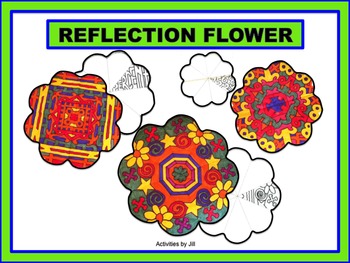
Reflection Flower
        

Explorations with Graphing Calculators
        

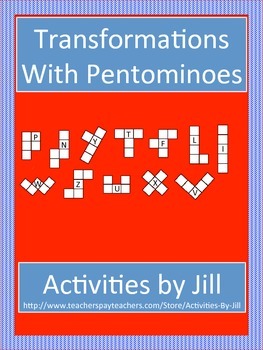
Transformations with Pentominoes
        

Team building activities or STEM challenges.  (Google them on Pinterest.)

4.  Choose one of the handy activity and/or review bundles I've created.  Find them in my TPT store by searching "End of Year".
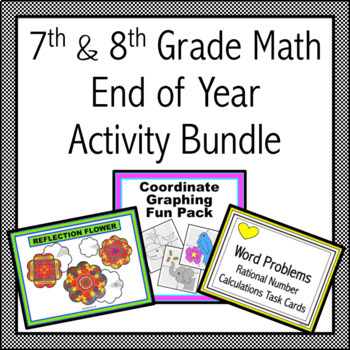


Whatever you choose to do to end the year on a bang, remember that it will be your students' last impression of you and your class!

Sunday, April 15, 2018

It's a Sale on Full Year & Unit Bundles for Algebra and Pre-Algebra!


Hello Everyone!

As most of us near the end of the current school year, we are often looking toward the next as well.  It's a teacher thing ... teachers are planners!

For me, this means re-evaluating my instruction, and wondering how I can teach certain concepts more effectively next year.  It's also a great time to browse materials to incorporate into my courses.

Are you, too, thinking ahead even as you wrap-up this school year?  


If so, take advantage of the sale I am throwing this week (4/16/18 to 4/19/18).  My Algebra & Pre-Algebra Full Year Bundles and Unit Bundles will all be 20% off.  Stock up now!

All unit bundles are listed and linked on my "Algebra 1 Curriculum Bundle" and "Pre-Algebra Curriculum Bundle" pages.  

I hope you can find something you can use and love! 💖

Jill


Thursday, April 5, 2018

10 Task Card Ideas for Middle & High School


Bellwork/Exit Slips: Have students work on one or two cards either individually or in pairs.  This is an easy and quick way to assess student understanding.

Seatwork:
• Put task cards in a container. 
• Each student will select a card, take it to his/her seat, and solve it.  Work/Answers can be recorded on notebook paper, a pre-made outline, or in a digital format. 

• When finished, students may check the answer (optional).  If you want them to self check, provide an answer key or put a QR code on each card.  Have them make corrections as needed.

• Next, students will return the card, choose a new one, and repeat the process.

• Think about your objectives for students.
Do you want all students to solve all problems?        If not, how many will you require?  
Do you want to differentiate the work?  
   If so, how?
Do you want to grade the work?

Stations/Centers: Put task card sets in different locations around the room and have students rotate from station to station as they solve problems.  

Classroom management suggestion: If students take cards to their seats to work on them it helps them remain focused.

Speed Dating: See  instructions HERE.

Note: This activity works best for questions that require work or time to think.

Scoot:
   • Lay cards out on desks. 

   • Students solve the problem at     their desk.

 • When the teacher says “scoot”, students move to the next seat and solve that problem.

• Note: This activity works best for quick answer questions.

Around the Room:
• Post cards around the room.

• Students will move around the room answering questions.  (Clipboards are nice for this activity.)

Group Work/Game Format: Turn work into a game (Jeopardy, Jigsaw Puzzles, CandyLand, etc.).  Each correct answer earns a student one play.

Back to Back Whiteboards: 
• Make two copies of each 
task card. 

• Pair students and give each 
a whiteboard, a marker, and a card (same question for each partner).

• Have students stand back to back as they write the answer on their whiteboard.

• When instructed by the teacher, the students turn to face each other and compare answers.  Provide a way for them to check that they are correct (answers in folder, on back of card, QR codes, etc.).

• Pass cards to a new pair of students and repeat the process.

• Alternate activity: The teacher displays a card with the document camera and all students solve the same problem at the same time.  This makes checking easier.


Scavenger Hunt:
• Hide task cards around the room (under desks, behind blinds, on shelves, etc.).

• Students search for the cards, and answer the questions as they find them.  Be sure to let them know how many cards there are, or how many you expect them to complete.

Review:
• Have students use task cards to study for a test or quiz.  Pull cards from several sets to create a complete review that will prepare students for the assessment.


Friday, March 30, 2018

Speed Dating Activity for the Secondary Classroom

This has become one of my absolute favorite task card activities!

Students are engaged, encouraging their peers, and learning. What could be better?

In math class, I think this activity works best when work is required to solve the problems.  Teachers use speed-dating in other subject areas though, with quick answer questions. 

Each student will need a different problem.  A set of task cards is great to use for this, but you could also cut apart questions from a worksheet.


Directions for Speed Dating Activity

1. Give each student a task card or question.  You may give each student a random card or use problems specific to the abilities of particular students. 
2. Each student must solve his/her problem and get it checked by the teacher.  You could do this as bell work or as an exit ticket the day before the activity.  I strongly recommend checking answers the day before so you can begin the activity quickly the next day.  Also, students will need their question card for the activity, so hang on to them!
3. After the problems have been checked, each student is an “expert” at solving his or her own personal problem.
4. Pair up students.  If you have an odd number of people, either you can play the part of a student or you can create an "invisible" student by putting a question and answer key on the extra desk and moving the materials along as students rotate. Each of them will need a piece of paper, pencil, and their task card.  They will need to rotate around the room every minute or two so you will need to plan out a continuous path for them to follow.  I suggest using two circles with the desks facing each other in pairs.
5. When everyone is seated, partners will trade cards, and solve the new problem.  When they are finished (or if they need help) their partner will check their work and/or answer any questions because they are the “expert” at solving that problem.
6. After an appropriate period of time, have each student take his/her original card and rotate one spot.  With desks arranged in circles as described in step 2, I have the students on the inside stand up and rotate one seat to their right.  The next time, I have the students on the outside stand up and rotate one place to their right.  This way everyone gets to move and will be paired up with someone new until they get back to the beginning.

Don't worry if students do not get to solve all of the problems.  How many they finish depends on the difficulty level of the questions, and they get a lot of practice regardless.

If the activity does go quickly, here's what you can do so that every student solves every problem.  When they are paired with their original partner, have them switch cards/questions.  (Every inside card will go to the outside and vice versa.)

Each student is now an "expert" for this new problem which they have already solved, checked, and had explained to them earlier in the activity.  Now, rotate as before and all students will be solving new questions.

By the way, do NOT help students! That is the job of the "expert".  I know this goes against teacher behavior, but resist!  Students helping students is what makes this activity successful. 😃

Need task cards? Browse mine here.

Saturday, March 17, 2018

Pi Memorization 2018

There's a new winner in my annual pi memorization contest!

A seventh grade student of mine recited 432 digits of pi.  AMAZING!  She is now #1 on my Top Ten List. 

Saturday, March 10, 2018

10 Reasons to Use Task Cards in Middle & High School


Task cards make differentiation easy.  What teacher can't appreciate that?

Task cards allow students to work at their own pace.  

   Facilitate this by using QR codes or by making an answer key available for student to self-check.  They can continue to learn with confidence if their answers are correct, or can seek help as needed.

   Task cards are great for classroom management!  Students concentrate on "their card" and stay in their "zone".  There are fewer distractions when they are not all working on the same thing.  It is also less overwhelming to work on one card than a worksheet with many questions.  I know, it's not what you might expect.  🤔

   Using task cards can be motivating for students simply because they are different from the typical routine.

   Conserve paper by making a set of task cards and using them year after year.

  Task cards make it easy for teachers to make adjustments to lessons.  Add a few cards, remove a few, change how many you require students to answer, or change the format of the activity.  Adapt a lesson easily from year to year or class to class.

   Use task cards for individual or group work.  They free up the teacher to work with students who really need assistance.

   Task card activities allow for controlled movement in the classroom.  Middle and high school students thrive on this.

   Students may ask more questions knowing that other students are working on something different.  It won’t be so obvious if they ask for help because students are focused on their own personal task.

   Task cards are versatile.  Use them for seat work or play a game.  There are so many options!  (I will be posting soon about what you can do with task cards in secondary.)


Check out my collection of math task cards here.

Sunday, March 4, 2018

How Much Do I Love Pi Day? 😍

Let me count the ways ...
1.  I love Pi Day because students love it.
2.  I love Pi Day because it is a math/science inspired holiday.
3.  I love Pi Day because I can celebrate  and educate at the same time.
4.  I love Pi Day because it is an opportunity to mix things up by doing something a bit different ... and outside the box.
5.  I love Pi Day because it's fun!


Here's what I always do on Pi Day:
1.  Have a pi memorization contest.

I challenge students to memorize as many digits of pi as possible.  If they can make it onto my Top Ten list I buy them their favorite pie!
This is my list with names removed.  It always amazes me! 
They are all 7th and 8th grade students.
2.  Make pi bracelets.  

     These are a HUGE hit!  I often think the boys enjoy this even more than the girls.  Believe it or not, I've had students and parents show me the bracelets years later!  

     They are just glass beads strung on elastic.  Each digit is a different colored bead and they are strung according to the order of the digits in pi.  

     I started out with PTO money to buy supplies. 💰 Now I stock up when I find a bargain.  If I'm lucky, I might have a bit of funding to help out.

3.  Provide circular treats.

     Pie, cookies, cake, candy, cupcakes ... anything circular works!

Here are some other things to do on Pi Day:
1.  Lessons related to circles (circumference, area, surface area, volume).

These activities can take the form of color by number worksheets, task cards, and more.


2.  Make Pi Day related decorations.

3.  Play a pi related game such as MATHO.


4.  Do a webquest to learn about pi, Albert Einstein, and/or autism.


5.  Sing Pi Day songs.  (Just Google to find these...)

6.  Measure circular items to discover the value of pi.

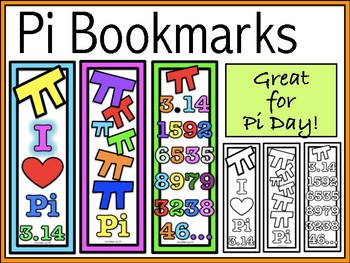
7.  Make pi bookmarks.  

These are available in my TPT store from March 11-17 as a FLASH FREEBIE!


There are many resources available.  You can find free options online, purchase from Teachers Pay Teachers, or use materials you already have available.  

Whatever you decide to do ... enjoy the celebration!

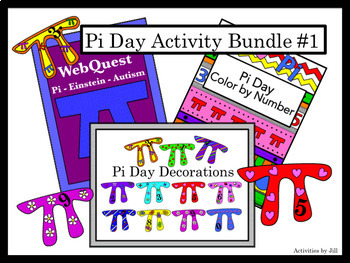
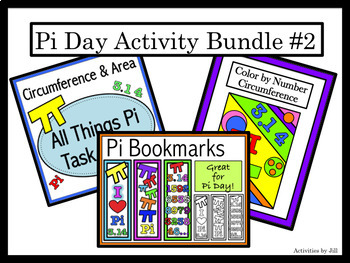
Get multiple activities with a Pi Day Bundle.

Pi Day Bundle #1
Pi Day Bundle #2