Saturday, March 10, 2018

10 Reasons to Use Task Cards in Middle & High School


Task cards make differentiation easy.  What teacher can't appreciate that?

Task cards allow students to work at their own pace.  

   Facilitate this by using QR codes or by making an answer key available for student to self-check.  They can continue to learn with confidence if their answers are correct, or can seek help as needed.

   Task cards are great for classroom management!  Students concentrate on "their card" and stay in their "zone".  There are fewer distractions when they are not all working on the same thing.  It is also less overwhelming to work on one card than a worksheet with many questions.  I know, it's not what you might expect.  🤔

   Using task cards can be motivating for students simply because they are different from the typical routine.

   Conserve paper by making a set of task cards and using them year after year.

  Task cards make it easy for teachers to make adjustments to lessons.  Add a few cards, remove a few, change how many you require students to answer, or change the format of the activity.  Adapt a lesson easily from year to year or class to class.

   Use task cards for individual or group work.  They free up the teacher to work with students who really need assistance.

   Task card activities allow for controlled movement in the classroom.  Middle and high school students thrive on this.

   Students may ask more questions knowing that other students are working on something different.  It won’t be so obvious if they ask for help because students are focused on their own personal task.

   Task cards are versatile.  Use them for seat work or play a game.  There are so many options!  (I will be posting soon about what you can do with task cards in secondary.)


Check out my collection of math task cards here.

Sunday, March 4, 2018

How Much Do I Love Pi Day? 😍

Let me count the ways ...
1.  I love Pi Day because students love it.
2.  I love Pi Day because it is a math/science inspired holiday.
3.  I love Pi Day because I can celebrate  and educate at the same time.
4.  I love Pi Day because it is an opportunity to mix things up by doing something a bit different ... and outside the box.
5.  I love Pi Day because it's fun!


Here's what I always do on Pi Day:
1.  Have a pi memorization contest.

I challenge students to memorize as many digits of pi as possible.  If they can make it onto my Top Ten list I buy them their favorite pie!
This is my list with names removed.  It always amazes me! 
They are all 7th and 8th grade students.
2.  Make pi bracelets.  

     These are a HUGE hit!  I often think the boys enjoy this even more than the girls.  Believe it or not, I've had students and parents show me the bracelets years later!  

     They are just glass beads strung on elastic.  Each digit is a different colored bead and they are strung according to the order of the digits in pi.  

     I started out with PTO money to buy supplies. 💰 Now I stock up when I find a bargain.  If I'm lucky, I might have a bit of funding to help out.

3.  Provide circular treats.

     Pie, cookies, cake, candy, cupcakes ... anything circular works!

Here are some other things to do on Pi Day:
1.  Lessons related to circles (circumference, area, surface area, volume).

These activities can take the form of color by number worksheets, task cards, and more.


2.  Make Pi Day related decorations.

3.  Play a pi related game such as MATHO.


4.  Do a webquest to learn about pi, Albert Einstein, and/or autism.


5.  Sing Pi Day songs.  (Just Google to find these...)

6.  Measure circular items to discover the value of pi.

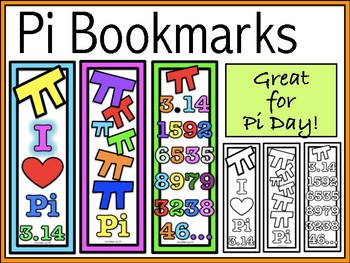
7.  Make pi bookmarks.  

These are available in my TPT store from March 11-17 as a FLASH FREEBIE!


There are many resources available.  You can find free options online, purchase from Teachers Pay Teachers, or use materials you already have available.  

Whatever you decide to do ... enjoy the celebration!

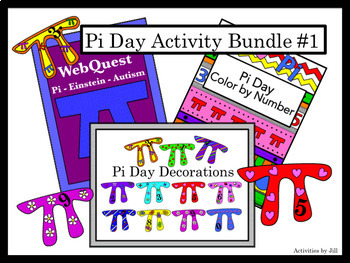
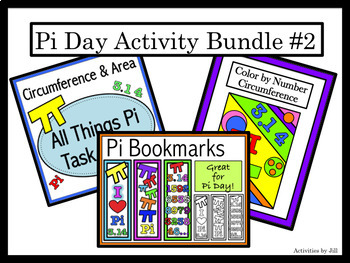
Get multiple activities with a Pi Day Bundle.

Pi Day Bundle #1
Pi Day Bundle #2


Monday, February 12, 2018

Hearts & Math

I love to have something fun to use in my math class near a holiday!
  
Try this FREE activity!
In elementary school kids tend to make crafts, exchange valentines 💌, and simply celebrate.  Middle school and high school is different, but it is still nice to do something festive.


How about the same
FREE activity in Spanish?
Hearts are a natural for Valentine's Day, so they are perfect to use with older students.  If the activity above doesn't work for your course, why not take a look at some of the other heart themed products that I've created?  I hope you can find something to use with your students!
Tie geometry to solving
multi-step equations!
Area of circles is a good
 topic for many ages!
Integer practice is always good!
I love radicals!
Puzzles are fun!
Need to practice
function notation?
More puzzle fun!

Tuesday, January 16, 2018

My Favorite Method for Teaching Percent Word Problems

Word problems involving percent can be especially difficult for students.  Various methods can be used to solve them.  Yet, just as students are gaining confidence at solving percent word problems, they often run across a problem requiring a different approach.  The abundance of situations that can be described, and what specific information is given can make word problems very confusing … not just for kids!

Here is an example of the sort of problem students REALLY struggle with!

A scarf costs $16.48 with tax included. If the tax rate is 5%, what is the selling price of the scarf?


After many years of teaching this topic, I’ve decided that the method I will explain here is the most successful of those I’ve tried.  This approach enables students to analyze and solve any word problem involving percents more confidently.

Too often, students identify the base number as the "total".  This leads to many misunderstandings.  The base is "the original amount", which is not always the total.  After this misconception is cleared up, the problem solving immediately becomes easier.  Identifying the base first, even if it is missing, gets students off to a strong start.

Once the issue of identifying the base is clarified, the next step is to determine what to use as the percentage and the rate.  The rate is a "percent" and the percentage is "part of the original amount".  This can be a bit tricky because the part can sometimes be more than the original amount.  For example, suppose you are given a price with tax included.  That price would be more than the original amount, but is the percentage because it is based on the original amount.

In my experience, the most difficult thing for students to understand is that the percentage and the rate must be in agreement.  For example, consider the problem below.


Eight percent of the students in a class of twenty-five are absent today.  How many students are present?

p = ___ number of students present
r = 92% present
b = 25

The base is 25 because that is the original amount of students in the class.  We want to find out how many students are present, and this would be the percentage because it is part of the original amount.  Although 8% can be used as the rate, it represents the percent of students absent.  To find the number of students present quickly, I would use 92% because it is the percent of students present.

This is an overview of this approach.  To become really good at analyzing information and solving a variety of word problems involving percents takes practice.  If you are interested in further support materials, they can be found here.


Tuesday, January 9, 2018

Get Ready for the Olympics!

I LOVE the Olympics!
That's why I designed this bulletin board, and I'm sharing the Winter Owl Bulletin Board FREE Plans with you.  Use my cute Winter Sport Owls Collection, the free pattern from Classroom Compulsion, or make your own!

The captions included in the plans are editable.  I used ones related to slope and transformations for my bulletin board.

I'm counting down the days until the Olympic Winter Games begin (February 9. 2018) ... will you be ready?

Please leave comments and/or pictures of your creations.  I'd love to see them!

Negative Integer Exponents Stations Activity

So ... I've been teaching exponent rules in my Algebra 1 class.  

Although students learned the negative integer exponent rule in their pre-algebra course, my algebra students never seem to come to me knowing it particularly well.   

I didn't want to spend a lot of time on notes and examples.  Instead, I wanted to see whether or not they could extend the rule to more challenging situations. For this reason, I decided both to review the negative integer exponent rule, and to build on it by using a stations activity.

I designed the stations to demonstrate how the rule remains unchanged, yet the problems increase in difficulty.  My goal for my students was for them to work independently to review the negative exponent rule, then to continue applying it in progressively more challenging problems as they moved through the four stations.

Hint Sheet for Station A
I created a hint sheet with notes and examples to go along with station worksheet A, as well as one to be used with worksheets B-D.  The hint sheets were available to all students.  However, some students needed them, while others did not even pick them up.

All students began at Station A.  
Station A
There, they completed a ten question review worksheet, self-checked their answers with the answer key at that station, and asked me for clarification as needed.

They continued through Stations B, C, and D in the same manner.  You can find the activity here.

I was happy with the way this worked out.  Overall, it took much less time than teaching the lesson in a traditional manner. Students commented that they liked being able to just START since many of them didn't need to be completely retaught. Those who did not remember the rule, grasped it quickly as they worked through the first station and asked questions as needed.  I will definitely use these stations again!


Wednesday, November 8, 2017

Differentiating Doesn't Have to be Difficult!

Do you differentiate as often as you feel you should?
Sometimes the planning required to differentiate can be discouraging.  If that's the case for you, start out simple. Differentiate by student choice, because kids love having alternatives.  If you are concerned about leveled work, it is usually pretty easy to find lesson options at different ability levels even if you are primarily focusing on choice. 

You might think this would be chaotic, but I've found it to be great for classroom management!  In my experience, students are often much more focused on their work when the entire class is not working on the same assignment. 

Begin by choosing a topic about which you have lots of resources available.  Then, think about content, learning style, and grading.

Content
Begin with the end in mind.  
  • What do you want your students to have learned at the end of the lesson?
  • Are your students at very different levels of understanding or at similar levels?

Learning Style/Interest
Provide choices.
  • Do you need easy, medium, and challenging assignment choices?
  • Is each assignment choice relevant to the topic and productive in terms of resulting in student learning?
  • Are you offering enough variety to address different learning styles? Brainstorm resources you already have or ones that can be found or created easily.
    • A traditional worksheet or textbook assignment is FINE.  Some kids prefer this!  Visual learners and kinesthetic learners thrive on activities that require drawing or coloring, cutting and pasting, using task cards, or completing a card sort.  Partner activities are great for social and verbal learners.  Students who love to read and write may be prefer to read about the topic and summarize it by writing about it, creating a product, or producing a digital display to demonstrate their learning.
    • Don't get overwhelmed when brainstorming lesson options.  

Grading/Planning
Keep it simple!
    • Focus on the objective: What do you want your students to have learned at the end of the lesson?
  • Realistically, about how many class periods should be allocated to completing the work? 
    • I decide on a reasonable number of class periods.  Then, I make a final due date for all work a couple of days later.  That allows students who work slowly to finish up outside of the classroom without a penalty.  It also means that those who finish quickly are not left sitting around for a few days with nothing else to do.
  • Making many of the lessons self check will make your life easier and allow students to get immediate feedback.  
    • I usually have students check in with me each time they complete an assignment.  After checking it off as complete, I show them the answer key.  They check their own work and let me know if they have questions about anything.  I've found that this process keeps them honest and I am regularly touching base with every student.
  • Should each student complete the same amount of work?  
    • Don't get stuck on this quantity versus quality issue.  A lower ability student may complete a few relatively simple assignments while a higher level student only completes one or two more complicated tasks.  That's ok!  Other times, a lower ability student may take a long time to complete an assignment while a higher level student completes several.  That's ok, too.  It is hard to predict how this will work out.  As long as your students are working and learning, they are progressing.
  • How should I grade the work?
    • As the teacher, you need to decide whether or not you feel that each student made a concerted effort to learn the material.  After trying many grading methods over the years, I recommend that you either give a completion grade adjusted appropriately for effort and accuracy, or simply give an assessment (exit ticket) and grade that.

Tips for Success:

Remember, every student doesn't learn in the same way, in the same amount of time, or by completing the same number of assignments.  

Advise students to choose lessons that are appropriate for them personally ... neither too easy nor too difficult. The goal is for them to learn, and they are all starting out at different levels!  I have rarely had a problem with students choosing activities that are too easy.  However, I so sometimes have to redirect students who select a lesson that is too difficult for them.  Remind them that if they begin at the appropriate level, they will progress much more quickly!
Here is a great space-saving way to present lesson options when differentiating!