Saturday, August 18, 2018

Do You Teach Students to Use a Calculator?

What have I learned from teaching middle school math for more than 30 years?  Teach kids to use calculators - don't make them figure it out for themselves.  Learning to use a calculator on their own can lead to so many mistakes.  You can't just hand a kid a scientific or graphing calculator and expect them to know how it works. 

For example, suppose you want your students to "Find x squared when x is negative 32."   Nearly all of your students will enter this into their calculators as -32 squared, and will get an incorrect answer of -1024.  They must be taught to put a negative base in parenthesis when entering it into a calculator in order to get the correct answer, (-32) squared = 1024.
Don't assume your students know how to use calculators.  Instead, build calculator mini-lessons into your curriculum.


Want your students to be more engaged?  They love learning how to use new functions on their calculators.  And guess what?  As you teach them the correct way to use a calculator, suddenly you are elevated to "genius" status in their minds!

Of course the daily tips, tricks, and mini-lessons form the basis of your instruction.  However, if you'd like to try a more formal graphing calculator lesson, you might check this one out.
Explorations with Graphing Calculators

Monday, August 6, 2018

Interactive Notebook Hack

I just had to write a quick post about this ...

How is it that after doing something for years and feeling good about it, you suddenly get an idea for an improvement?

My "lightbulb" idea this year is to copy the table of contents for my interactive notebook on white card stock.

I like using binders rather than composition notebooks.  The only problem for me is that the hole-punched table of contents often tears before the end of the school year.  

We'll see how the card stock works, but I have high hopes that this "hack" will be a great help!  (My students are excited to try it out.)  ☺


Thursday, July 26, 2018

Back to School ... Always a New Start

It's that time of year again!


Back to School Bundle
Teachers' thoughts turn to readying their classrooms, choosing back to school activities, and making preparations to meet a new group of students.  

Why not reinvent yourself and your classroom, try out some new ideas, and enjoy a fresh start?  After all, this is a rather unique opportunity teachers enjoy at the beginning of each school year.  The teaching profession offers the chance to recreate, renew, rejuvenate, refresh, and revitalize ... yourself, your classroom, and your instruction.  


I also have math versions for 6th, 
7th, Pre-Algebra, & Algebra.
As you consider ideas for the new school year, maybe one or more of my resources will be just what you are looking for!


FREE! 
 
Learning Styles & 
Study Habits
FREE!
Work Ethic Posters

I Have ... Who Has?
Following Directions

Sunday, May 20, 2018

End the School Year with a Bang!

End the year on a high note with engaging, yet relevant instruction.  

Do you have an exam to prepare for?  Remember, the review doesn't have to be boring to be beneficial. 

Maybe you aren't giving an exam, but have finished teaching the required units/standards and are wondering how to fill those extra days?
Of course, you'll still want your students to be actively engaged and learning.

Here are some ideas to fill those last weeks or days.  And ... your students will remember your class fondly as they end the year on a positive note!  😍

1.  Make reviewing more fun by having a game day as a follow up to completing that traditional study guide.  


2.  Have students create the study guide for their exam along with you.  

  • This can be an especially helpful strategy as it teaches students vital study skills. 
  • Modeling the process of making a study guide helps students learn how to create their own study materials.
  • Students can witness first hand how a teacher goes about creating study materials (and therefore, tests). 
  • High school and college students are often responsible for preparing for tests independently, so can provide valuable experience and insight.
3.  Done with the exam or not giving one?  Fill a day or a week with these engaging activities.
  • Break out a "fun" project you normally don't have time to fit into your lesson plans.  Here are some of my favorites that kids love:

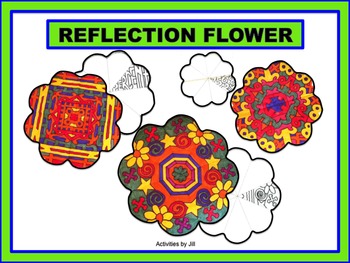
Reflection Flower
        

Explorations with Graphing Calculators
        

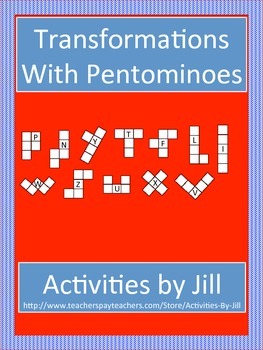
Transformations with Pentominoes
        

Team building activities or STEM challenges.  (Google them on Pinterest.)

4.  Choose one of the handy activity and/or review bundles I've created.  Find them in my TPT store by searching "End of Year".


Whatever you choose to do to end the year on a bang, remember that it will be your students' last impression of you and your class!

Sunday, April 15, 2018

It's a Sale on Full Year & Unit Bundles for Algebra and Pre-Algebra!


Hello Everyone!

As most of us near the end of the current school year, we are often looking toward the next as well.  It's a teacher thing ... teachers are planners!

For me, this means re-evaluating my instruction, and wondering how I can teach certain concepts more effectively next year.  It's also a great time to browse materials to incorporate into my courses.

Are you, too, thinking ahead even as you wrap-up this school year?  


If so, take advantage of the sale I am throwing this week (4/16/18 to 4/19/18).  My Algebra & Pre-Algebra Full Year Bundles and Unit Bundles will all be 20% off.  Stock up now!

All unit bundles are listed and linked on my "Algebra 1 Curriculum Bundle" and "Pre-Algebra Curriculum Bundle" pages.  

I hope you can find something you can use and love! 💖

Jill


Thursday, April 5, 2018

10 Task Card Ideas for Middle & High School


Bellwork/Exit Slips: Have students work on one or two cards either individually or in pairs.  This is an easy and quick way to assess student understanding.

Seatwork:
• Put task cards in a container. 
• Each student will select a card, take it to his/her seat, and solve it.  Work/Answers can be recorded on notebook paper, a pre-made outline, or in a digital format. 

• When finished, students may check the answer (optional).  If you want them to self check, provide an answer key or put a QR code on each card.  Have them make corrections as needed.

• Next, students will return the card, choose a new one, and repeat the process.

• Think about your objectives for students.
Do you want all students to solve all problems?        If not, how many will you require?  
Do you want to differentiate the work?  
   If so, how?
Do you want to grade the work?

Stations/Centers: Put task card sets in different locations around the room and have students rotate from station to station as they solve problems.  

Classroom management suggestion: If students take cards to their seats to work on them it helps them remain focused.

Speed Dating: See  instructions HERE.

Note: This activity works best for questions that require work or time to think.

Scoot:
   • Lay cards out on desks. 

   • Students solve the problem at     their desk.

 • When the teacher says “scoot”, students move to the next seat and solve that problem.

• Note: This activity works best for quick answer questions.

Around the Room:
• Post cards around the room.

• Students will move around the room answering questions.  (Clipboards are nice for this activity.)

Group Work/Game Format: Turn work into a game (Jeopardy, Jigsaw Puzzles, CandyLand, etc.).  Each correct answer earns a student one play.

Back to Back Whiteboards: 
• Make two copies of each 
task card. 

• Pair students and give each 
a whiteboard, a marker, and a card (same question for each partner).

• Have students stand back to back as they write the answer on their whiteboard.

• When instructed by the teacher, the students turn to face each other and compare answers.  Provide a way for them to check that they are correct (answers in folder, on back of card, QR codes, etc.).

• Pass cards to a new pair of students and repeat the process.

• Alternate activity: The teacher displays a card with the document camera and all students solve the same problem at the same time.  This makes checking easier.


Scavenger Hunt:
• Hide task cards around the room (under desks, behind blinds, on shelves, etc.).

• Students search for the cards, and answer the questions as they find them.  Be sure to let them know how many cards there are, or how many you expect them to complete.

Review:
• Have students use task cards to study for a test or quiz.  Pull cards from several sets to create a complete review that will prepare students for the assessment.


Friday, March 30, 2018

Speed Dating Activity for the Secondary Classroom

This has become one of my absolute favorite task card activities!

Students are engaged, encouraging their peers, and learning. What could be better?

In math class, I think this activity works best when work is required to solve the problems.  Teachers use speed-dating in other subject areas though, with quick answer questions. 

Each student will need a different problem.  A set of task cards is great to use for this, but you could also cut apart questions from a worksheet.


Directions for Speed Dating Activity

1. Give each student a task card or question.  You may give each student a random card or use problems specific to the abilities of particular students. 
2. Each student must solve his/her problem and get it checked by the teacher.  You could do this as bell work or as an exit ticket the day before the activity.  I strongly recommend checking answers the day before so you can begin the activity quickly the next day.  Also, students will need their question card for the activity, so hang on to them!
3. After the problems have been checked, each student is an “expert” at solving his or her own personal problem.
4. Pair up students.  If you have an odd number of people, either you can play the part of a student or you can create an "invisible" student by putting a question and answer key on the extra desk and moving the materials along as students rotate. Each of them will need a piece of paper, pencil, and their task card.  They will need to rotate around the room every minute or two so you will need to plan out a continuous path for them to follow.  I suggest using two circles with the desks facing each other in pairs.
5. When everyone is seated, partners will trade cards, and solve the new problem.  When they are finished (or if they need help) their partner will check their work and/or answer any questions because they are the “expert” at solving that problem.
6. After an appropriate period of time, have each student take his/her original card and rotate one spot.  With desks arranged in circles as described in step 2, I have the students on the inside stand up and rotate one seat to their right.  The next time, I have the students on the outside stand up and rotate one place to their right.  This way everyone gets to move and will be paired up with someone new until they get back to the beginning.

Don't worry if students do not get to solve all of the problems.  How many they finish depends on the difficulty level of the questions, and they get a lot of practice regardless.

If the activity does go quickly, here's what you can do so that every student solves every problem.  When they are paired with their original partner, have them switch cards/questions.  (Every inside card will go to the outside and vice versa.)

Each student is now an "expert" for this new problem which they have already solved, checked, and had explained to them earlier in the activity.  Now, rotate as before and all students will be solving new questions.

By the way, do NOT help students! That is the job of the "expert".  I know this goes against teacher behavior, but resist!  Students helping students is what makes this activity successful. 😃

Need task cards? Browse mine here.