Tuesday, January 29, 2019

Gallery Walks in Math Class

Have you tried a gallery walk in your math class?

I admit to having heard of them years ago.  However, I've only recently tried one myself.  And ... I'm sold!

Students were forced to observe patterns, pay attention to detail, and draw conclusions.  (This was not easy for them ... and these were high ability students.)
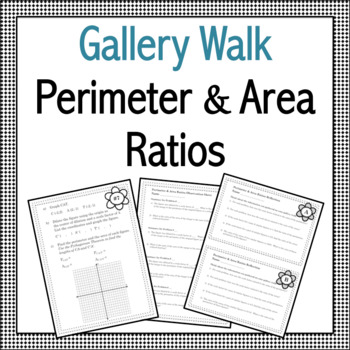
I've designed two gallery walks so far.  I used this one about "Perimeter & Area Ratios" with my pre-algebra students.


I used this "Introduction to Exponential Functions" gallery walk with my Algebra 1 class.  Since we barely touch on this topic in this course, I tried to keep it relatively simple and used it after giving introductory notes and practice to present the basic information.  (It was appropriate, yet still challenging.)
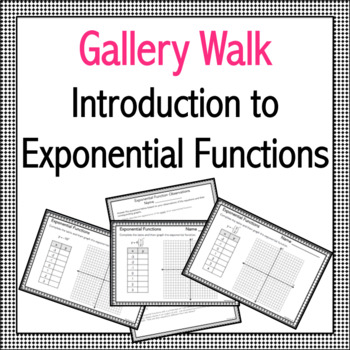
Multiple, similar problems were posted around the room (or in the hallway).  Students were given recording sheets with questions that required them to focus on certain aspects of the problems.  They had to recognize patterns and similarities, then use them to deduce/synthesis rules.

Here's what I learned from my two experiences:
• If students solve and check the problems a day or two before you plan to do the gallery walk, things will go more smoothly.  
• Of course, it is important that the work is correct.  If not, students will have difficulty observing patterns and identifying similarities.  (A colleague of mine suggested posting the "answer keys" instead of having students solve the problems.  This is a way to save time and be certain that the answers are correct.  Whether or not you have students solve the problems you post for the gallery walk really depends on exactly what you want students to achieve from the activity.)
Lastly, you may look at the gallery walk questions and think that the answers seem relatively obvious.  However, your students will probably not feel the same.  Remember: They are just learning the material.  Also, most students don't practice this type of thinking often so it is challenging for them.

Monday, January 21, 2019

Get to Know Your Students Better


Clipart credit to Thankful in Third
Do you ever wish you knew your students better ... especially if you teach at the secondary level?

As teachers, the list of standards we must cover seems only to grow from year to year.  It can be difficult to find time to connect with students.  How can you learn more about their lives and interests?  

I'm sure we all have "getting to know you" activities in our teacher toolkits.  We use them at the beginning of the school year.  However, when the first week of school is past, do you ever do anything similar again or do you file those materials away for the next school year?


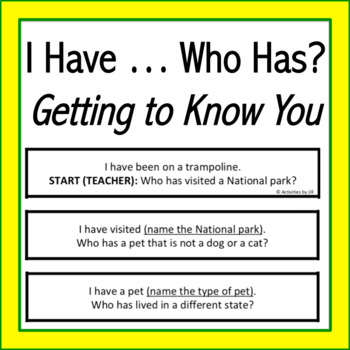
This summer, I created an "I have ... Who has?" game to use at the beginning of the school year.  I was really pleased, and a bit surprised with my students' (8th graders) response.  

Here's the thing ...
Although we enjoyed it, I never expected my students to ask if we could do it again. 

A semester later, when they asked yet again, I did pull out the game.  We enjoyed it just as much and I discovered even more about my students! 

What have I learned?  Getting to know you activities aren't just for the first week of school.    


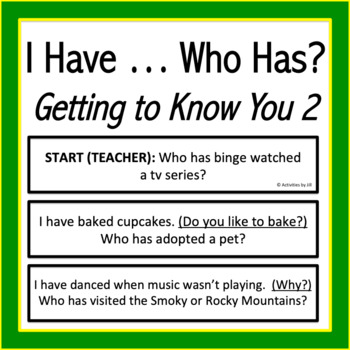
So, I've just finished creating a second version of the game to use before the end of the year.  If you don't use this sort of activity in class, how about trying it during an advisory period or study hall?  There is no prep other than printing the slips and cutting them apart.

Try this or a similar activity and enjoy the benefits of knowing your students better!  Remember, if they enjoy coming to your class and have a positive relationship with you, they will likely be better behaved. 😉

Saturday, January 12, 2019

Keeping Students Busy Bell to Bell

So, ... you are confident that you have planned a great lesson.  Suddenly, you unexpectedly have a few students finishing earlier than expected.  "What should I do next?" they ask, as you wonder where your carefully timed plan for the class period went off track.  

How can you avoid this issue in the future?

Try these simple, yet effective ideas:
Collect task cards on a variety of topics.  They are an easy way to provide both routine and challenging practice with minimal effort on your part.

Set up an area in your classroom with activities for early finishers. (See ideas here.)

If only a few students finish quickly, they can be a valuable source of help to you.  Ask them if they would like to serve as "student teachers" by helping others.  Remind them that as "student teachers" they will want to be to be helpful, but should not provide others with answers.

Friday, December 14, 2018

How do teachers recharge?

How do you recharge your "teacher battery" after a rough day, week, semester, or school year?


The teaching profession requires constant caring, planning, and intellectual energy.  This can be exhausting, especially when you add your personal life to the mix.  Sometimes we need a break from our normal routine to ease the stress resulting from being pulled in so many different directions.

Something one of my professors said back when I was pursuing my Master's degree has always stuck with me.  He said that teachers often don't get to see the end result of their work.  

For example, an architect gets to see a completed building and feels a sense of satisfaction.  A surgeon gets fulfillment from seeing a patient make a full recovery.  An artist feels a sense of accomplishment each time a painting or sculpture is finished.  

However, a teacher may never see the adults former students grow into.  How exactly can we pinpoint the part we might have played in the development of a human being?  The satisfaction of a job well done is more difficult to recognize than in most professions.  A visual of the finished product created by a teacher is elusive.

My professor's solution was to participate in Habitat for Humanity projects.  He saw the completed homes as well as the joy of the families who received them. 

My favorite thing to do when I need to recharge my teacher battery is to redecorate a room in my home.  I enjoy the process of choosing a new color palette, painting, and redecorating.  Then, when I see the end product of my efforts, I feel a wonderful sense of satisfaction.
Before
After


What do you do to recharge your "teacher battery"?


Monday, December 3, 2018

Choosing Effective Partner Activities


In 30+ years of teaching, I've definitely learned to be choosy about the activities I use in my classroom!  


Here are my 3 must-haves when it comes to partner activities:

1.  A valid reason to have students work together rather than alone
Why pair students for an activity?  Practicing with a partner is a great way to ensure that each student understands a concept or skill before turning them loose to work independently.  A well-designed activity can really help students clarify their understanding of a topic.

2. A task that promotes discussion 

Discussion tends to flourish in pairs as opposed to in larger groups because both students must interact.  Asking questions and giving input tends to be less intimidating for them when working in pairs.

3. Students who are actively involved and learning

One student copying answers from the other is NOT what I'm after.  As they complete the activity, both students should be putting forth effort and making progress toward achieving the learning objective.


My go-to for meeting all of these needs at once in my math classes is a Partner Power activity.  Each student solves a different set of problems and must do his/her own work, but when the partners compare answers they should be the same. This helps students build confidence as they verify correct solutions, identify errors, and correct their work. Rich discussions result because students are solving different problems, yet are responsible for showing their own work.  As a bonus, these activities are self-checking. 


Create your own task or find a readymade math activity in my Teachers Pay Teachers store. 


Monday, September 3, 2018

Using Student Helpers Effectively in Middle & High School Math

Do you ever wonder how to use student helpers in middle or high school effectively?  

Here's what a teacher friend of mine does with her sixth grade students and the process is applicable to secondary students of all ages.  This illustrates classroom management at its best!

1.  During work time, students with questions write their names in a list on the board. 

2.  The teacher calls the first student to her desk to help them.  When finished, the student erases his/her name from the board and the teacher calls the student whose name appears next on the list. 

3.  The process continues in this manner without a line of impatient students talking while they wait for help.

4.  If the list on the board becomes lengthy, students who have already had questions answered become experts.  

5.  A second list is created with names of students who can help others, including what problem numbers they can explain. They become student helpers.  

This method of classroom management frees up the teacher to work with students who require more intensive help, or those who are further along on the assignment.  At the same time, other students are not becoming frustrated by having to wait to get help.

Saturday, August 18, 2018

Do You Teach Students to Use a Calculator?

What have I learned from teaching middle school math for more than 30 years?  Teach kids to use calculators - don't make them figure it out for themselves.  Learning to use a calculator on their own can lead to so many mistakes.  You can't just hand a kid a scientific or graphing calculator and expect them to know how it works. 

For example, suppose you want your students to "Find x squared when x is negative 32."   Nearly all of your students will enter this into their calculators as -32 squared, and will get an incorrect answer of -1024.  They must be taught to put a negative base in parenthesis when entering it into a calculator in order to get the correct answer, (-32) squared = 1024.
Don't assume your students know how to use calculators.  Instead, build calculator mini-lessons into your curriculum.


Want your students to be more engaged?  They love learning how to use new functions on their calculators.  And guess what?  As you teach them the correct way to use a calculator, suddenly you are elevated to "genius" status in their minds!

Of course the daily tips, tricks, and mini-lessons form the basis of your instruction.  However, if you'd like to try a more formal graphing calculator lesson, you might check this one out.
Explorations with Graphing Calculators